Wellness Insight
In pregnancy regular sun exposure is must as vitamin D requirement increases in the body.The ideal level of Vitamin D in the body is 100–150 nmol/L. Levels below 50 nmol/L indicate deficiency.
In the early days after childbirth, many women experience pain, especially from uterine contractions as the uterus returns to normal size. These contractions can last 2–3 days and often interfere with rest and recovery.
Normally, NSAIDs are used to manage labour pain. Interestingly, Vitamin D also has anti‑inflammatory effects similar to NSAIDs.
During labour, the body produces prostaglandins — hormone‑like substances that trigger uterine contractions. High prostaglandin levels increase pain. Vitamin D helps reduce inflammation and may lower pain by influencing prostaglandins. Women with higher Vitamin D levels often report less back pain and reduced intrapartum pain.
Beyond pain relief, Vitamin D is essential for pregnant mothers because it supports:
Bone mineralization
Calcium balance (homeostasis)
Healthy development of the baby
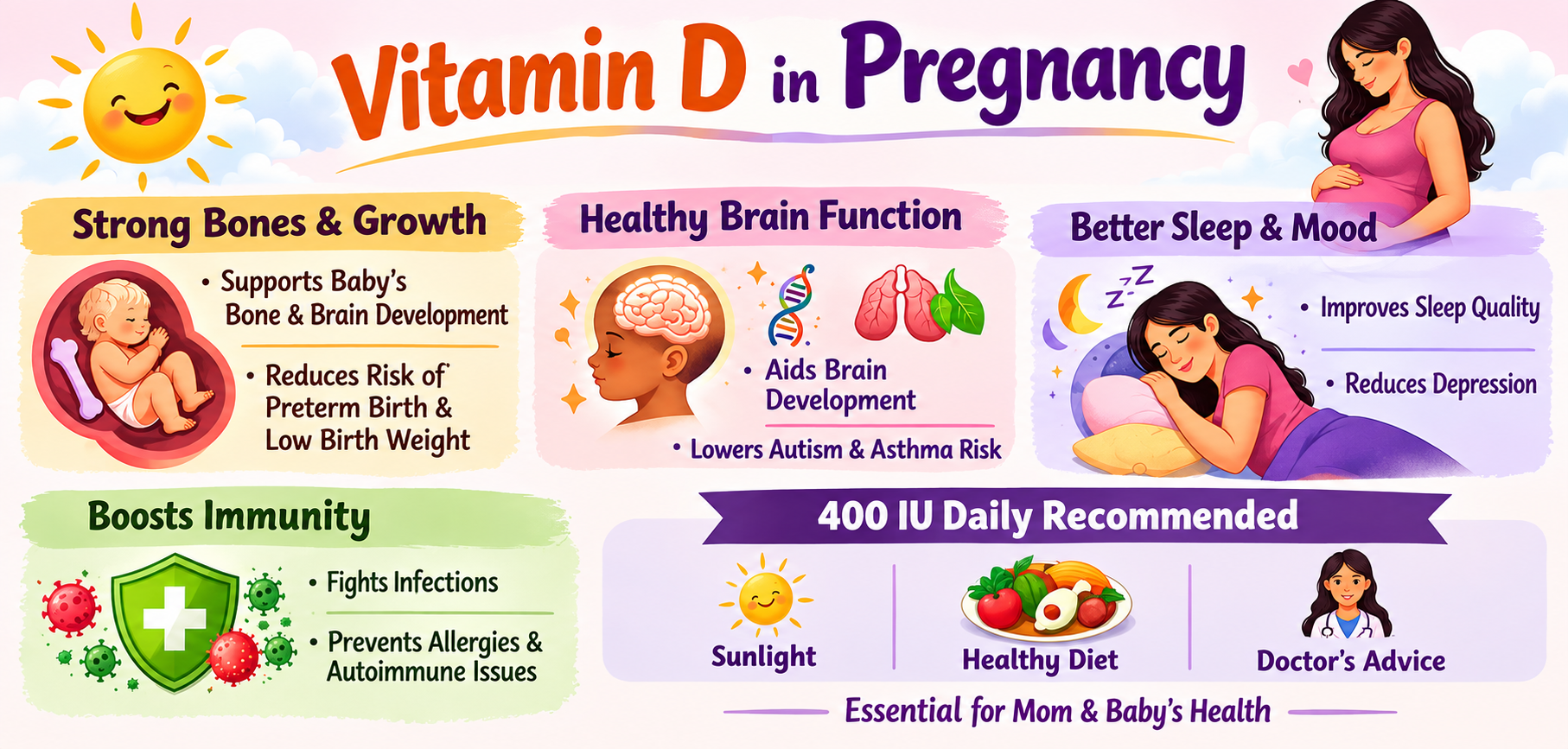
Vitamin D is very important during pregnancy for both mother and baby.
The body makes Vitamin D when the skin is exposed to sunlight. Climate and lifestyle affect how much Vitamin D is produced.
For newborns, 400 IU daily is recommended to support bone health.
The growing baby needs Vitamin D for strong bones, healthy brain development, and proper growth according to gestational age. Deficiency can lead to complications like preterm birth, low birth weight, enlarged brain ventricles, or deformities.
Brain & Nerve Development
Lack of Vitamin D in pregnancy can reduce the baby’s head size and affect brain development.
Deficiency may alter genes linked to lung growth, increasing the risk of asthma.
Vitamin D helps regulate serotonin in the brain. Low levels may raise the risk of autism spectrum disorder.
It also affects dopamine and norepinephrine — neurotransmitters important for mood. Deficiency may contribute to depression.
Mothers with low Vitamin D often have maternal depression and deliver smaller babies, especially in winter.
Sleep & Mental Health
Humans are naturally active in the day and rest at night.
Melatonin, the sleep hormone, is produced at night in darkness.
Morning sunlight helps regulate melatonin, leading to better sleep and fewer mental health problems.
Poor sunlight exposure and irregular sleep disturb the circadian rhythm, increasing risks of obesity and metabolic disorders.
Adequate Vitamin D reduces body fat and supports overall activity.
Immunity & Protection
In the second trimester, Vitamin D supports immune development in the baby.
It helps prevent allergies and immune‑related diseases later in life.
Vitamin D produces antimicrobial peptides (like defensin and cathelicidin) that fight infections in the respiratory tract.
It strengthens the body’s natural barriers and helps clear bacteria.
By binding to Vitamin D receptors on immune cells, it regulates growth and prevents autoimmune diseases.
In this generation exposure to sunlight is very less as people are more likely to stay in the environment where there is a option of work from home which causes stress and end up in various diseases .
-Dr.Achala.B.S
Published
05 Oct 2026